At a glance
Complete Guide to Planting, Maintenance, Tapping, Yield and Profit Malayalam name: റബ്ബർEnglish name: Natural Rubber / Para RubberBotanical name: Hevea brasiliensis (Willd.…
In this article
50 sections to explore
Complete Guide to Planting, Maintenance, Tapping, Yield and Profit
Malayalam name: റബ്ബർ
English name: Natural Rubber / Para Rubber
Botanical name: Hevea brasiliensis (Willd. ex A.Juss.) Müll.Arg.
Plant family: Euphorbiaceae
Crop type: Perennial plantation crop
Main product: Natural rubber latex
Research checked: 31 October 2026
Rubber is one of Keralam’s most important commercial plantation crops. It is cultivated mainly for its milky latex, which is processed into natural rubber sheets, concentrated latex and other rubber products used by many industries.
Keralam has a long history of rubber cultivation, particularly in its humid midland and foothill regions. Rubber plantations can provide income over many years, but farmers must generally maintain the trees for six to seven years before commercial tapping begins.
Successful rubber farming requires suitable land, healthy planting material, good drainage, balanced nutrition, protection from pests and diseases, skilled tapping and careful control of production costs.
This guide explains how to establish and manage a rubber plantation in Keralam, how much rubber farmers can realistically produce, and how to evaluate its earning potential using published research and clearly identified financial estimates.
1. Where Can Rubber Grow in Keralam?
Rubber grows best in a warm, humid tropical climate with well-distributed rainfall and deep, well-drained soil. It is particularly suitable for many of Keralam’s midland and lower foothill areas.
Suitable Districts and Regions
Kottayam: One of Keralam’s principal rubber-growing districts, with established plantations, processing infrastructure and experienced growers.
Pathanamthitta: An important traditional rubber-growing region, particularly in suitable midland and foothill locations.
Ernakulam: Rubber is widely grown in suitable lateritic and well-drained midland areas.
Kollam and Thiruvananthapuram: Suitable locations include humid midlands and lower hill regions with adequate soil depth and drainage.
Idukki: Lower-elevation and suitable mid-elevation areas can support rubber. High-altitude, cold or excessively steep locations require careful evaluation.
Kannur, Kasaragod, Kozhikode and Malappuram: Rubber is established in several northern Keralam plantation belts. Soil moisture conservation becomes important in places experiencing prolonged summer dryness.
Thrissur and Palakkad: Rubber can grow in suitable humid regions and foothill pockets. Hot, dry and windy locations may be less favourable.
Wayanad: Some lower and warmer areas support rubber, but elevation, temperature and local rainfall must be examined before planting.
Alappuzha: Rubber can grow in suitable areas, but waterlogging and a high water table limit its suitability in many low-lying locations.
Important: The presence of rubber cultivation in a district does not mean that every property in that district is suitable. Soil, drainage, slope, temperature and water availability must be checked individually.
Climate Requirements
Keralam Agricultural University (KAU) provides the following reference conditions for rubber cultivation:
| Factor | Suitable Condition |
|---|---|
| Annual rainfall | 2,000–4,500 mm |
| Rainy days | Approximately 125–150 days/year |
| Mean temperature | 25–28°C |
| Maximum temperature | Approximately 29–34°C |
| Minimum temperature | Around 20°C or higher |
| Relative humidity | Around 80% |
| Sunshine | Approximately 2,000 hours/year |
| Altitude | Generally up to 500 metres |
| Soil depth | At least 1 metre |
| Soil pH | Approximately 4.5–6.0 |
| Drainage | Well-drained soil without prolonged waterlogging |
These are agronomic reference conditions, not strict boundaries that guarantee or prevent successful cultivation.
Rainfall distribution is especially important. A location receiving adequate total annual rain can still experience significant dry-season stress.
Best Soil for Rubber
Rubber generally performs well in deep, fertile lateritic soils and suitable loamy soils.
Some non-lateritic red and alluvial soils may also support rubber if they provide sufficient rooting depth and drainage.
Avoid establishing a plantation without professional assessment where:
- Soil is very shallow or contains an extensive hardpan.
- Water stagnates around the roots for extended periods.
- The water table remains close to the soil surface.
- The location experiences severe drought or excessive exposure to strong winds.
- Steep slopes are unstable or highly susceptible to erosion.
On sloping properties, use contour planting, suitable terraces and protective ground cover to minimise soil loss.
2. When Is the Best Time to Plant Rubber in Keralam?
Recommended Planting Season
June to July is generally the preferred planting period in Keralam.
This corresponds to the southwest monsoon season, when adequate rainfall helps young plants establish roots.
Farmers should begin planting only after dependable rains have started and soil moisture is sufficient.
Avoid planting during severe waterlogging or prolonged dry conditions.
Recommended Rubber Varieties
Commercial rubber varieties are commonly called clones. They are usually propagated by budding to maintain desirable characteristics.
Keralam Agricultural University lists the following among its Category I clones recommended for traditional rubber-growing regions:
| Rubber Clone | Description |
|---|---|
| RRII 105 | Established commercial high-yielding clone |
| RRII 430 | Recommended Category I clone |
| RRII 414 | Recommended Category I clone |
| RRII 417 | Recommended Category I clone |
| RRII 422 | Recommended Category I clone |
| PB 260 | Recommended Category I clone |
The best clone depends on the plantation’s local growing conditions, disease risks and management system.
Some clones may be more susceptible to particular diseases. Farmers should therefore consult a Rubber Board field officer before selecting planting material.
Selecting Healthy Rubber Plants
Purchase genuine budded plants from a recognised rubber nursery.
Healthy planting material should have:
- Verified clone identity.
- A healthy bud union.
- Well-developed roots.
- Mature, healthy leaves.
- No visible fungal infection or serious pest damage.
- No severe root deformation or damaged stem.
For polybag planting material, KAU recommends plants with approximately two to three mature leaf whorls.
Avoid purchasing unidentified seedlings merely because they are inexpensive.
3. How to Plant Rubber: Step-by-Step
Recommended Planting Distance
The required spacing depends on terrain and the selected planting system.
| Planting Spacing | Plants per Hectare | Plants per Acre |
|---|---|---|
| 4.9 × 4.9 metres | 420 | 170 |
| 6.7 × 3.4 metres | 445 | 180 |
| 6.4 × 3.4 metres | 467 | 189 |
| 6.1 × 3.4 metres | 489 | 198 |
| 4.6 × 4.6 metres | 479 | 194 |
These are published KAU reference populations.
A plantation using approximately 6.7 × 3.4 metre spacing may have around 180 planting positions per acre before accounting for paths, boundaries and other unusable areas.
Farmers should not automatically choose the highest density. Excessive crowding can affect future canopy development, access and plantation management.
Land Preparation
Clear harmful weeds and unwanted vegetation while preserving the soil.
On sloping land, mark planting rows along contours.
Prepare drainage channels wherever needed, but avoid uncontrolled excavation that increases erosion.
Existing natural waterways should remain functional.
Planting Pit Size
KAU recommends selecting pit size according to the depth and condition of the soil.
In sufficiently deep and suitable soil, a smaller planting hole that accommodates the plant and its root system may be adequate.
In harder soils, larger pits measuring approximately 75 × 75 × 75 cm or 90 × 90 × 90 cm may be appropriate.
Separate topsoil from subsoil when digging.
KAU’s general pit-filling recommendation includes:
- Approximately 12 kg of well-rotted compost or cattle manure per pit.
- Approximately 200 g of rock phosphate per pit.
These are published general reference quantities. Soil-test results should determine whether additional phosphorus or other amendments are needed.
Planting Procedure
Step 1: Mark planting positions. Select suitable spacing and establish accessible rows.
Step 2: Prepare drainage. Ensure that rainwater will not remain stagnant around the roots.
Step 3: Dig and refill pits. Use suitable topsoil and the recommended soil amendments.
Step 4: Prepare the young plant. Remove the polybag carefully or release the root-trainer plant without damaging the root system.
Step 5: Position correctly. Keep the bud union above the soil surface.
Step 6: Fill and firm the soil. Eliminate major air spaces while avoiding excessive compaction.
Step 7: Apply mulch. Place suitable organic material around the plant, leaving the stem base uncovered.
Step 8: Protect the plant. Protect young rubber from livestock, physical damage and severe dry-season exposure.
Step 9: Inspect regularly. Replace dead or seriously damaged plants with the correct clone.
The primary objective during establishment is steady, healthy root and stem growth.
4. How to Maintain Rubber Trees
Rubber requires several years of care before it begins producing commercial latex.
Poor maintenance during the immature stage can delay tapping and increase the time required to recover the initial investment.
Watering and Irrigation
Rubber is generally grown under rainfed conditions in Keralam.
However, young plants may require supplemental irrigation during prolonged dry periods.
Newly planted trees: Monitor soil moisture regularly. Irrigate when necessary to prevent the young root system from drying out.
Young established trees: Maintain mulch, control excessive weed competition and irrigate when soil moisture becomes insufficient.
Mature plantations: Suitable plantations are generally rainfed, although drought can reduce growth and latex production.
No verified, universal irrigation schedule in litres per tree or days between watering applies across all Keralam soils, rainfall zones and tree ages.
Farmers should therefore monitor local soil moisture rather than follow an arbitrary fixed schedule.
Avoid waterlogging, which restricts root aeration and encourages root problems.
Manure and Fertiliser Management
Fertiliser requirements depend on tree age, soil fertility, ground cover and the stage of plantation development.
KAU publishes the following reference annual nutrient schedules.
| Plantation Stage | N : P : K : Mg Nutrient Schedule (kg/ha/year) |
|---|---|
| First year | 20 : 20 : 8 : 3 |
| Second year | 40 : 40 : 16 : 6 |
| Third year | 50 : 50 : 20 : 7.5 |
| Fourth year | 40 : 40 : 16 : 6 |
| Fifth year until tapping, with leguminous cover | 30 : 30 : 30 |
| Fifth year until tapping, with natural cover | 60 : 40 : 24 |
| Mature trees under tapping | 30 : 30 : 30 |
Important: These figures describe annual nutrient requirements, not kilograms of commercially packaged fertiliser.
KAU’s accompanying product schedule for mature trees under tapping includes approximately:
- Urea: 80 g per tree per application.
- Rock phosphate: 200 g per tree per application.
- Muriate of potash: 65 g per tree per application.
The reference schedule has applications during April–May and September–October.
Use these figures only as a starting reference. A soil test and, where appropriate, leaf analysis are important because unnecessary fertilisation adds cost and can disturb nutrient balance.
Magnesium requirements also vary regionally. KAU notes that routine magnesium recommendations are more relevant in specified southern and central Keralam districts than in some other rubber-growing areas where available soil magnesium may already be sufficient.
Mulching
Mulching helps reduce moisture loss, suppress weeds and protect the soil against erosion.
Suitable materials include dried leaves, cut grass and organic crop residues.
Apply mulch around the plant without allowing it to remain tightly packed against the stem.
Mulching is particularly useful before Keralam’s summer dry period.
Weed Management
Young rubber plants should not face severe competition from weeds.
Clear weeds near the base of young trees while retaining beneficial vegetation or cover crops between rows.
Avoid repeated deep cultivation that damages rubber roots.
KAU recommends suitable leguminous cover crops, including Pueraria phaseoloides and Mucuna bracteata, for soil protection and improved plantation management.
Pruning and Branch Management
Rubber is not normally pruned like a fruit crop.
Young trees should develop strong trunks and healthy crowns.
Remove dead, broken or seriously diseased branches when necessary.
Avoid excessive pruning or unnecessary bark damage.
If branch development is poor, consult Rubber Board staff about recommended branch-induction practices.
Intercropping in Rubber Plantations
Intercropping can provide income before young rubber trees develop a closed canopy.
Possible crops include:
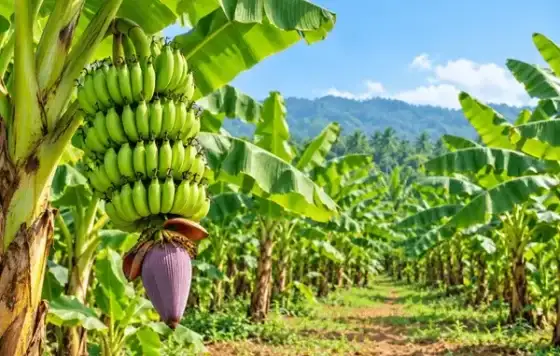
- Banana.
- Pineapple.
- Ginger.
- Turmeric.
- Suitable vegetables.
- Certain tuber crops.
As shade increases, the suitability and production of intercrops change.
KAU recommends maintaining adequate separation between intercrops and rubber trees, including a minimum distance of approximately 1.5 metres from rubber tree bases.
On steep slopes, protective ground cover is often preferable to soil-disturbing intercrops.
Farmers should calculate intercropping expenditure and income separately from rubber plantation accounts.
Flowering and Pollination
Mature rubber trees generally undergo seasonal leaf shedding, known as wintering.
KAU describes normal wintering in South India during December–February.
New leaves develop after wintering, and flowering follows.
Commercial latex production does not require farmers to undertake hand pollination.
5. Month-by-Month Rubber Farming Calendar in Keralam
The following calendar is a practical seasonal management guide. Actual activities vary with rainfall, elevation, plantation age and local weather.
| Month | Recommended Activities |
|---|---|
| January | Monitor leaf shedding, powdery mildew and young-plant moisture |
| February | Protect developing leaves and inspect dry-season stress |
| March | Maintain mulch and provide necessary irrigation |
| April | Prepare first fertiliser application, arrange soil testing and inspect drainage |
| May | Complete land preparation, pits and monsoon readiness |
| June | Begin planting after dependable rains; establish ground cover |
| July | Continue suitable planting and inspect abnormal leaf fall |
| August | Maintain drainage and monitor monsoon diseases |
| September | Begin recommended second fertiliser application where appropriate |
| October | Complete nutrition programme and inspect plantation growth |
| November | Prepare dry-season moisture conservation measures |
| December | Monitor seasonal leaf fall and maintain plantation records |
Fertiliser application should follow soil moisture conditions and technical recommendations, rather than the calendar alone.
6. When Can Rubber Be Harvested?
Rubber trees produce latex through a process called tapping.
A trained worker makes a controlled cut into the bark, allowing latex to flow into a collection cup.
First Tapping
Rubber trees commonly begin commercial tapping around six to seven years after planting under suitable management.
However, age alone is not sufficient.
The trunk must achieve adequate girth, and the bark must be suitable for tapping.
A commonly used conventional opening criterion is a trunk girth of approximately 50 cm, subject to Rubber Board assessment and the applicable opening standard.
Opening trees too early can damage future production potential.
Tapping Frequency
The tapping system depends on the clone, plantation condition and technical recommendations.
For several modern high-yielding clones, KAU describes half-spiral tapping every third day as a recommended system.
Other approved systems may be appropriate under specific management conditions.
Increasing tapping frequency without technical guidance can damage bark and contribute to tapping panel dryness.
When Is Latex Collected?
Tapping is generally conducted during the early morning.
Latex production depends on favourable weather, tree condition, tapping frequency and other management factors.
Rain can interrupt tapping or dilute collected latex.
Rubber has no single annual harvest month comparable to crops harvested once per season. Production takes place through repeated tapping during suitable periods.
Productive Lifespan
KAU gives a conventional economic life of approximately 32 years, including:
- Around 7 immature years.
- Around 25 productive years.
Some plantations may remain economically productive for longer under advanced management, but extended productive life should not be assumed in normal financial planning.
7. How Much Rubber Can One Acre Produce?
Rubber yield should be measured in kilograms of dry rubber, not simply litres of fresh latex.
Fresh latex contains water and varying quantities of dry rubber. Consequently, a litre of latex cannot be treated as equivalent to a kilogram of dry rubber.
Published Production Benchmark
The Rubber Board reported an average Indian productivity of approximately 1,500 kg of dry rubber per hectare of actually tapped area during 2024–25.
This equals approximately:
607 kg of dry rubber per acre per year.
This figure is a published national benchmark, not a guaranteed yield for an individual Keralam plantation.
Actual performance depends on clone, tree age, planting density, moisture, nutrition, diseases, tapping efficiency and the number of tapping days.
Yield at Different Stages
| Plantation Stage | Production Expectation |
|---|---|
| Years 1–5 | No commercial tapping |
| Around years 6–7 | Tapping begins when trees meet opening requirements |
| Newly opened plantation | Usually below established mature output; no universal per-tree yield established |
| Established mature plantation | Production depends on the farm; 607 kg/acre is a national tapped-area benchmark |
| Old plantation | Yield may decline depending on bark condition, tapping history and tree health |
Example Production Per Tree
Consider a mature one-acre plantation with:
- 180 productive rubber trees.
- 607 kg annual dry rubber production.
- 100 tapping rounds during the year, assumed for calculation.
The calculated production would be:
| Measure | Calculated Amount |
|---|---|
| Annual dry rubber per acre | 607 kg |
| Annual dry rubber per tree | Approximately 3.37 kg |
| Dry rubber per tapping round, per acre | Approximately 6.07 kg |
| Dry rubber per tree per tapping round | Approximately 34 g |
These per-tree and per-round figures are mathematical illustrations, not published field averages.
The assumption of 100 tapping rounds is used only to explain the calculation. It is not a recommended annual tapping schedule.
Farmers should record their actual tapping rounds, tapped-tree population and dry rubber output for accurate yield analysis.
8. Major Rubber Diseases and Pests
Keralam’s humid climate creates favourable conditions for several important rubber diseases.
Regular field inspection and timely treatment help protect long-term productivity.
Abnormal Leaf Fall
Cause: Mainly Phytophthora species.
Symptoms: Sudden leaf shedding, brown lesions, infected leaf stalks and associated fruit rot.
Risk period: Particularly important during the southwest monsoon.
Management: Improve drainage, monitor disease development and follow current Rubber Board recommendations for preventive protection where necessary.
Powdery Mildew
Symptoms: Whitish or powdery growth on tender leaves, leaf curling and premature shedding.
Risk: Particularly relevant during refoliation.
Management: Monitor young leaves and use currently approved treatments when justified.
Corynespora Leaf Disease
Symptoms: Brown leaf lesions, holes in affected leaves, leaf fall and sometimes twig dieback.
Management: Confirm disease identity, check clone susceptibility and obtain current technical control recommendations.
Pink Disease
Symptoms: White or pink fungal growth around branches, cracking bark, latex exudation and branch dieback.
Management: Inspect susceptible trees, avoid unnecessary wounds and apply approved disease management practices.
Bark Rot
Symptoms: Dark or damaged areas around the tapping panel, poor bark renewal and rotting tissue.
Management: Improve tapping hygiene, manage rain exposure and obtain technical treatment advice.
Tapping Panel Dryness
Symptoms: Reduced or completely stopped latex flow from affected tapping areas.
Management: Reduce tapping stress, rest affected panels when advised and investigate underlying causes.
Other Pests
Rubber may also be affected by scale insects, mealybugs, termites, bark-feeding caterpillars and certain soil pests.
Do not apply pesticides without identifying the problem.
Use integrated pest management, including healthy planting material, good sanitation, suitable drainage, regular monitoring and protection of beneficial organisms.
Where chemical treatments are necessary, verify current Indian product registration, rubber-crop approval, recommended application rates and safety precautions.
9. Weather Risks and Common Farming Mistakes
Heavy Rainfall
Excessive rainfall can interrupt tapping, cause waterlogging, increase fungal disease pressure and damage soil on steep slopes.
Maintain drainage and suitable erosion-control measures.
Drought
Prolonged dryness may reduce young-plant growth and latex production.
Mulching, protective ground cover and appropriate supplemental irrigation are important.
Strong Winds
Strong winds can damage branches and uproot vulnerable trees.
Avoid exposed, unsuitable planting sites.
Common Mistakes
Farmers should avoid:
- Planting in shallow or waterlogged soil.
- Purchasing unidentified rubber clones.
- Neglecting young trees during dry periods.
- Applying fertiliser without soil testing.
- Removing all protective ground vegetation.
- Opening rubber trees before they meet tapping requirements.
- Employing untrained tappers.
- Excessive or deep tapping that injures the cambium.
- Selling poorly processed or contaminated rubber.
- Assuming that high market prices will continue indefinitely.
10. How to Earn Money from Rubber Farming
Rubber income depends on the quantity and quality of rubber produced, the market price received and the total cost of managing the plantation.
Farmers can sell latex or process it into commercial rubber products.
Rubber Products and Selling Options
Fresh field latex: Collected and sold through suitable latex collection channels.
Ribbed smoked sheets (RSS): Prepared by coagulating latex, rolling it into sheets and processing it through approved smoking and drying methods.
Unsmoked sheets: Processed rubber sheets sold through appropriate buyers.
Cup lump and scrap rubber: Rubber collected in different physical forms, usually attracting different prices.
Concentrated latex: A specialised product requiring appropriate processing equipment.
Prices vary by grade, moisture, contamination, dry rubber content and market conditions.
Processing Rubber Sheets
The general process includes:
- Collecting clean latex.
- Filtering to remove contaminants.
- Coagulating latex using the correct processing procedure.
- Rolling coagulated rubber into sheets.
- Drying or smoking under suitable conditions.
- Grading and sorting finished sheets.
- Storing and marketing the finished rubber.
Farmers should obtain Rubber Board processing training rather than guess chemical concentrations or handling procedures.
Rubber Producers’ Societies and Group Processing Centres can help small farmers improve processing quality and marketing arrangements.
Storage
Processed rubber should be kept clean, dry and protected from moisture, mud and contamination.
Separate products by grade.
Avoid storing improperly dried sheets, which can develop quality problems and attract lower offers.
11. Rubber Market Prices in Keralam
Rubber prices change frequently and should always be checked before selling.
Official Rubber Board Reference Prices
Kottayam market — 30 October 2026
| Rubber Grade | Reference Price |
|---|---|
| RSS 4 | ₹298 per kg |
| RSS 5 | ₹292 per kg |
| ISNR 20 | ₹279 per kg |
| Latex, 60% DRC | ₹197.60 per kg |
These figures come from Rubber Board quotations expressed per 100 kg and converted to per-kilogram values.
The Rubber Board states that these are reference prices and exclude applicable GST and incidental transportation, warehousing and other expenses.
The quotation for concentrated latex at 60% dry rubber content is not directly comparable with fresh field latex or dry rubber sheets.
Farmers should confirm the applicable market grade, actual buyer quotation and transaction costs.
Official price source: https://www.rubberboard.gov.in/public?lang=E
12. How Much Does It Cost to Start a Rubber Plantation?
Rubber cultivation requires investment before commercial latex production begins.
Costs vary depending on terrain, labour, planting material, soil fertility, drainage, transport and plantation infrastructure.
Published NABARD Investment Benchmark
NABARD Keralam’s 2025–26 unit-cost schedule provides an indicative rubber plantation investment reference of:
₹5,50,000 per hectare — approximately ₹2,22,600 per acre.
This is an institutional financing benchmark, not an exact quotation for a particular plantation.
Actual expenses should be calculated using local labour rates, nursery quotations and site-specific requirements.
Illustrative Initial Establishment Budget for One Acre
The following figures are hypothetical budgeting allowances, not published government cost rates or verified October 2026 supplier quotations.
| Expense | Illustrative Cost |
|---|---|
| Bedded/budded planting material and replacements | ₹25,000 |
| Land preparation and drainage | ₹42,000 |
| Pit preparation and planting labour | ₹38,000 |
| Soil testing, organic inputs and fertiliser | ₹24,000 |
| Ground cover, mulch and plant protection | ₹15,000 |
| Transport and contingency | ₹16,000 |
| Total Illustrative Establishment Cost | ₹1,60,000 |
If years two through six require an assumed ₹25,000 per acre per year for maintenance, that would add ₹1,25,000.
Under these assumptions, the cumulative pre-tapping expenditure would be approximately ₹2,85,000.
This illustration excludes land purchase, financing costs and major processing infrastructure.
The farmer must replace these assumptions with real quotations and annual records.
Published Rubber Production Costs
The Rubber Board published a 2021–22 cost-of-production study.
For Keralam plantations using a half-spiral, every-third-day tapping system, the reported costs included:
| Cost Category | Historical Cost per kg of Dry Rubber |
|---|---|
| Cost A — Operating expenses | ₹90.64 |
| Cost B1 — Operating expenses plus fixed-capital interest | ₹90.99 |
| Cost B2 — Includes imputed land rent | ₹125.25 |
| Cost C1 — Includes amortised development expenditure | ₹160.25 |
| Cost C2 — Includes managerial cost | ₹172.89 |
These are historical 2021–22 research figures, not current 2026 production costs.
The study also identifies substantial differences between plantations relying on hired labour and those using self-tapping.
13. Example Profit and Loss from One Acre
Consider a fully established one-acre rubber plantation producing 607 kg of dry rubber annually.
Assume the following annual expenditure:
| Expense | Hypothetical Annual Cost |
|---|---|
| Tapping and collection labour | ₹55,000 |
| Fertiliser, manure and soil testing | ₹12,000 |
| Weed, pest and disease management | ₹7,000 |
| Processing materials, energy and associated labour | ₹10,000 |
| Transport, repairs and miscellaneous expenses | ₹6,000 |
| Total Annual Operating Expenses | ₹90,000 |
These figures are hypothetical and do not establish current Keralam wage rates. The model excludes land rent, financing, establishment-cost recovery and any unpaid owner labour.
Example Earnings at Different Prices and Yields
| Scenario | Annual Production | Selling Price | Gross Revenue | Operating Surplus/Loss |
|---|---|---|---|---|
| Weak production and adverse price | 400 kg | ₹200/kg | ₹80,000 | −₹10,000 |
| Moderate production, rubber-lot price example | 607 kg | ₹278/kg | ₹1,68,746 | ₹78,746 |
| RSS 4 reference price example | 607 kg | ₹298/kg | ₹1,80,886 | ₹90,886 |
The ₹200 price is a hypothetical adverse-price assumption. The ₹278 reference comes from a dated Keralam rubber-lot market report, while ₹298 was the Rubber Board’s RSS 4 Kottayam reference on 30 October 2026.
The model assumes all output is saleable at the stated price and keeps operating costs fixed for comparison.
These figures are operating surplus estimates, not final net profit.
The farmer must still account for establishment costs, land value, interest, depreciation and other applicable expenses.
What Determines Rubber Farming Profitability?
The most important factors are:
- Number of healthy, tappable trees.
- Average annual dry rubber production.
- Skilled tapping labour availability.
- Rubber grade and processing quality.
- Number of productive tapping days.
- Local labour and input expenses.
- Selling price and marketing arrangements.
- Cost of replacing old plantations.
Rubber should be evaluated as a long-term investment rather than a quick-return seasonal crop.
14. Government Support for Rubber Farmers in Keralam
Several government programmes provide support for eligible rubber growers.
Scheme eligibility, application windows and available budgets must be checked before expenditure.
KERA Rubber Replantation Scheme
The Government of Keralam’s KERA Project, implemented in collaboration with the Rubber Board, provides assistance for eligible replanting of existing uneconomic rubber plantations.
The published grant is:
₹75,000 per hectare.
It is divided into:
| Instalment | Assistance |
|---|---|
| First instalment | ₹55,000 per hectare |
| Second instalment | ₹20,000 per hectare |
| Total | ₹75,000 per hectare |
The scheme specifies eligibility conditions including landholding and area limits, minimum planting density, recognised planting material and mandatory training.
It applies to eligible replanting of existing rubber plantations, not unrestricted establishment of new rubber plantations on previously non-rubber land.
Applications and payments depend on verification and scheme conditions.
Official source: https://keraplantation.kerala.gov.in/public/index.php/rubber_overview
Rubber Nursery Modernisation
KERA also provides a scheme for qualifying private rubber nurseries.
The scheme describes a maximum one-time modernisation grant of ₹6 lakh per eligible nursery, subject to cost-sharing and other conditions.
This assistance is for approved nursery enterprises, not an ordinary plantation grant to every farmer.
Rubber Production Incentive Scheme
Keralam operates a Rubber Production Incentive Scheme intended to support qualifying growers when eligible reference market prices fall below the notified support level.
Contemporary reports identify an RSS 4 reference support level of ₹250/kg from July 2026 under the relevant scheme phase.
However, the original 2026 government order was not independently retrieved for this article, and the reported application window for that phase has already ended.
Farmers should confirm the current official order, registration status, support rate and claim procedure through the relevant Rubber Producers’ Society or government office.
A price-gap incentive should not be understood as an additional fixed payment on top of the full market selling price.
Rubber Board Training and Extension
The Rubber Board provides technical guidance and training in nursery management, plantation maintenance, tapping, processing and related activities.
Farmers should contact their nearest Rubber Board regional or field office for current programmes, eligibility and training availability.
Official website: https://www.rubberboard.gov.in/
15. Five Frequently Asked Questions About Rubber Cultivation
1. Which rubber variety is best for Keralam?
KAU lists RRII 105, RRII 430, RRII 414, RRII 417, RRII 422 and PB 260 among Category I clones for traditional rubber-growing areas.
The correct selection depends on local climate, disease risk and plantation management. Consult the Rubber Board before purchasing plants.
2. How many rubber trees can be planted on one acre?
KAU planting arrangements include approximately 170 trees per acre at 4.9 × 4.9 metres and 180 trees per acre at 6.7 × 3.4 metres.
Other recommended spacings may accommodate different populations.
Actual planting numbers depend on land shape, slope, paths and drainage.
3. How many years does rubber take to produce latex?
Rubber commonly begins commercial tapping around six to seven years after planting, provided the trees have achieved sufficient trunk girth and bark development.
Poorly managed plantations may require longer.
4. How much rubber can one acre produce annually?
The Rubber Board’s published 2024–25 national average from actually tapped area equals approximately 607 kg dry rubber per acre per year.
Actual Keralam farm yields vary considerably, and the figure is not a guaranteed minimum.
5. Is rubber farming profitable in Keralam?
It can be profitable in a suitable, productive plantation with controlled labour costs and successful marketing.
However, profitability depends on yields, selling price, tapping labour, plantation age and the recovery of initial investment.
Farmers should calculate their own operating costs and long-term cash flow before planting or replanting.
16. Rubber Cultivation Checklist for Keralam Farmers
Before starting a new plantation, verify the following:
- The land is legally suitable for plantation cultivation.
- Soil is sufficiently deep and drains well.
- Soil testing has been completed.
- The selected rubber clone suits local conditions.
- Planting material comes from a reliable nursery.
- Recommended spacing and drainage are planned.
- Planting is scheduled for dependable monsoon conditions.
- Mulching and young-plant protection are arranged.
- Fertiliser application will follow soil-test recommendations.
- A budget covers the immature years before tapping.
- Suitable tapping and processing arrangements are available.
- Current government support eligibility is verified.
- Plantation expenses, yield and sales records will be maintained.
17. Final Advice for Rubber Farmers
Rubber cultivation can provide long-term agricultural income in Keralam, but successful plantations require careful planning and continuing management.
The most important decision is whether the selected land is genuinely suitable.
Farmers should invest in healthy, genuine planting material, protect soil and water resources, follow appropriate fertiliser recommendations and avoid beginning tapping before the trees are ready.
Once production begins, skilled tapping, quality processing, accurate yield records and sensible cost management are essential for maintaining profitability.
Because rubber prices, labour costs and climate conditions can change, farmers should periodically review their plantation’s economic performance.
For site-specific recommendations, consult the Rubber Board of India or a qualified agricultural extension officer.
Sources and Research References
The following official and institutional sources were reviewed on 31 October 2026. Older publications are identified by their original research years, and market prices are dated separately.
1. Keralam Agricultural University — Rubber Climate and Soil Requirements
Rainfall, temperature, humidity, sunshine, altitude and soil suitability.
2. Keralam Agricultural University — Recommended Rubber Clones
Traditional rubber-growing-region clone recommendations.
3. Keralam Agricultural University — Planting and Land Preparation
Spacing, planting methods, pit preparation and soil conservation.
4. Keralam Agricultural University — Manuring and Fertilisation
Nutrient recommendations for immature and mature plantations.
5. Keralam Agricultural University — Package of Practices Recommendations: Crops, 2016
Comprehensive reference for rubber cultivation, crop management, pests and diseases.
6. Tamil Nadu Agricultural University — Rubber Cultivation
Planting season, soil requirements, propagation and nursery recommendations.
7. Rubber Board of India — Official Website and Market Prices
Market reference prices, nursery information, extension services and technical updates.
8. Rubber Board — Rubber Statistical News, May 2025
Official 2024–25 production, tapped area and productivity statistics.
9. Rubber Board — Cost of Production of Natural Rubber, 2021–22
Published historical costs by tapping system.
10. NABARD Keralam — Unit Cost for Investment Activities, 2025–26
Agricultural investment unit-cost reference for Keralam.
11. Government of Keralam — KERA Rubber Schemes
Replanting assistance and rubber nursery modernisation.
Research note: Crop recommendations are drawn from agricultural institutions and official sources. Some financial examples are illustrative rather than published field observations. Farmers should verify current prices, registration requirements and chemical-use approvals before making commercial decisions.
Agricultural practices vary by crop, season and location. Use this guide as a reference, and check available sources and local conditions before making decisions.
Knowledge grows when we share it.
Nammude Keralam
Nammude Keralam
Share this article with another grower or farming enthusiast.